

Search Videos and More

Bite-Sized Resilience During Times of Uncertainty
COVID-19 increased the already high levels of stress for healthcare workers. This presentation offers perspective in this difficult environment in addition to simple strategies for relief.
Navigating COVID-19 and the Vaccine in Pregnant and Breastfeeding Women
Jeannie Kelly, MD, MS, Washington University maternal-fetal medicine specialist at the Women & Infants Center, a partnership among Barnes-Jewish Hospital, St. Louis Children’s Hospital and Washington University Physicians talks about COVID-19, how Ob/Gyns have had to adjust their practices.
Clinician’s Guide to Cardio-Oncology: Best Practice and Future Directions
Hosted by the Washington University and Barnes-Jewish Heart & Vascular Center, “Clinician’s Guide to Cardio-Oncology: Best Practice and Future Directions” was presented during the AHA Scientific Sessions on November 10, 2018 in Chicago, Illinois.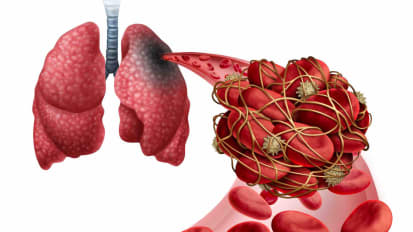
Acute Pulmonary Embolism – Massive PE – IR Perspective
Washington University interventional cardiologist at Barnes-Jewish Hospital, Pavan Kavali, MD reviews the benefits of catheter directed thrombectomy.
Leveraging Big Data and the EHR to Better Inform the Practice of Cardio-Oncology
Washington University cardiologist at Barnes-Jewish Hospital, Joshua Mitchell, MD, discusses the continually expanding field of available cancer therapies.
Comprehensive Cardiac MRI Therapy is a Must for Cardiac Safety
Washington University radiologist, Pamela Woodard, MD, presents an overview and update on how cardiac MRI can provide cardiac assessment and management of patients undergoing chemotherapy.
What are the Best Approaches to Monitor and Manage Vascular Toxicity in Cardio-Oncology?
Mayo Clinic cardiologist, Joerg Herrmann, MD, provides a review of the three main types of presentation of vascular toxicity seen with chemotherapy: acute vasospasm, acute thrombosis, and accelerated atherosclerosis.
2019 Shock Symposium
The Symposium on Contemporary Management of Cardiogenic Shock and Respiratory Failure focused on recent technological advances in the field of cardiogenic shock.
2020 Patient Safety & Quality Symposium: Leveraging Quality Improvement to Affect Change - Building High Reliability within an Academic Medical Center
This year’s theme focuses on using data and innovation to support behavioral and process transformation to improve patient outcomes.
2019 Patient Safety & Quality Symposium - Connecting the Dots: Highly Reliable Health Care Across the Continuum
This year’s theme, Connecting the Dots: Highly Reliable Health Care Across the Continuum, explores opportunities to improve patient care from hospital to intermediate care facilities to home.
2018 Patient Safety & Quality Symposium - Every Person, Every Moment: High Reliability in Patient-Centered Care
This year’s symposium reinforces the necessity of patient engagement to affect and impact safety and outcomes for every patient within every interaction.
2017 Patient Safety & Quality Symposium - High Reliability: Culture in Action
This year’s symposium theme, High Reliability: Culture in Action, explores the connection between individual and team commitment to high reliability.
Spinning Through PDSAs
This slide deck provides the key concepts of the Institute for Healthcare Improvement's Model for Improvement and how to apply them to rapid, small scale tests of change.
Integrating Research and Quality Improvement
This slide deck shows how finding the right balance between clinical research and quality improvement can accelerate advances in health care.
The Science of Improvement
This slide deck, provided by Lloyd Provost, MS, will help outline the differences between QI and research methods, and offer insight to integrate research and improvement into your work.
Development of a Standardized, Reproducible Screening Examination for Assessment of Pelvic Floor Myofascial Pain
Urogynecologists Melanie R. Meister, MD and Jerry L. Lowder, MD, MSc show a new standardized examination for patients with pelvic floor pain.
When Caring Hurts: Self-Preservation in the ED
Learn best practices in coping mechanisms and resiliency for health care provers in trauma.
Whole Blood: Ecclesiastes 1:9
Learn best practices in whole blood administration, protocols and policies.
Gunshot Wounds to the Abdomen: From Bullet to Incision
Learn best practices for treatment of abdomen gunshot wounds.
PA Trauma Systems - Successes and Failures over 30 years
Learn best practices developed over 30 years of successes and many failures in the Pennsylvania trauma system.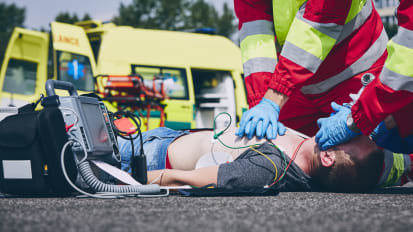
Improving Pre-Hospital Trauma Care via Health Services Research
Learn best practices in trauma care for pre-hospital providers, and how research plays a role.
2016 Patient Safety & Quality Symposium: Hardwiring for High Reliability
This year’s theme – Hardwiring for High Reliability – focuses on ingraining high reliability within every person in the organization.
Emergency Department Throughput
Operational Excellence worked with the Emergency Department to identify models for improvement of patient throughput. This analysis included reviewing the tact time, space utilization, flow opportunities, and implementation of process changes.
NPH Treatment Delivers Life-Changing Care to Older Adults
Treatment for normal pressure hydrocephalus (NPH) at our Neurology & Neurosurgery Center is unique to the region. Patients who have had dementia-like symptoms for years achieve significant improvements in quality of life by draining excess cerebrospinal fluid (CSF) with a shunt.
